
Key Takeaways
Modern corporate team building activities should go beyond bowling and happy hour to improve real collaboration, communication, and trust at work. Team building activities improve teamwork and collaboration only when they are intentionally designed around clear outcomes.
Immersive problem-solving experiences like private escape rooms are a good team building activity for C-level leaders and their staff, especially in high-pressure industries where decision-making under constraints mirrors daily operations.
Exit 4 Escape Rooms Chandler in Chandler, AZ offers corporate team building events tailored to small groups and large groups, with private, story-driven rooms ideal for strategy, leadership, and team bonding.
This article compares several team building activity formats-escape rooms, scavenger hunts, charitable events, cooking classes, and more-and shows where each best fits a company’s event calendar.
A practical planning section and FAQ at the end will help office managers and executive assistants design and book their next team building event with confidence.
Introduction: Rethinking Corporate Team Building in 2026
Corporate team building has come a long way from trust falls in a local park and awkward bowling nights. The best companies in the world now treat team building as a strategic investment-an intentional, experience-driven event designed to change how team members actually work together once they’re back at the office. The shift is unmistakable: activities that felt like mandatory fun five years ago have been replaced by structured challenges that develop communication and collaboration skills, build trust between executives and staff, and create shared reference points that last well beyond the event itself.
The challenges of 2024–2026 workplaces make this evolution urgent. Hybrid teams struggle with alignment. Burnout is widespread. There’s often a visible gap between C-level strategy and day-to-day execution. Generic socials aren’t going to fix that. The best team building activities are designed like simulations-safe spaces where leaders and employees can practice problem-solving, delegation, and decision-making together without real-world consequences.
That’s the central idea behind what we do at Exit 4 Escape Rooms Chandler: we create immersive, private corporate team building experiences in Chandler, Arizona, where executives and their teams solve layered puzzles under time pressure. The rest of this article will walk you through formats, examples, and planning tips to choose the right team building activity for your specific goals-whether that’s an escape room, a scavenger hunt, or something else entirely.
Why Some Employees Dread Team Building Events
Let’s be honest: a lot of people hear “team building event” and internally groan. The complaints are predictable-forced fun, irrelevant activities, awkward icebreakers that have nothing to do with the real conflicts between departments or levels of seniority. Lack of planning is a common reason for team building failure, and employees can tell when an event was thrown together last minute.
Think about the last generic bowling night or pizza lunch your company hosted. Did it actually change how your product and sales teams communicate? Bowling does not improve team collaboration or conflict resolution. Neither does karaoke. These activities fill time, but they don’t surface the working-style differences or trust gaps that slow your team down every Monday morning.
Poor planning, unclear goals, and one-size-fits-all formats especially frustrate introverts, remote staff flying in for a single day, and already-busy executives who view the event as a calendar intrusion. Team building activities should not rely on cookie-cutter formats. Team building events often fail due to lack of planning-not because the concept itself is broken. The rest of this article focuses on formats that respect people’s time, support psychological safety, and create lasting improvement in team spirit and performance.
What Makes a Good Team Building Activity for Corporate Teams
A good team building activity for corporate teams shares a few non-negotiable traits:
Clear objective. The activity maps to a real business need-building trust, improving cross-functional handoffs, onboarding new hires-not just “having fun.”
Inclusive design. Every participant, from C-suite to new hire, has a meaningful role. No one sits on the sidelines watching a few stars perform.
Real collaboration. The format requires people to share information, divide tasks, and solve problems together-not just work in parallel.
Debrief time. There’s a structured moment afterward to connect the experience to on-the-job behaviors.
Psychological safety. People can experiment, fail safely, and talk about what happened without blame.
Successful team-building activities align with team goals and are not merely recreational. Structured activities can build trust and improve cross-functional relationships when participants have to depend on each other to reach a common goal.
Contrast a purely social happy hour-where conversation stays shallow and cliques re-form-with an experiential format like an escape room or problem-solving challenge. In the latter, real working styles surface under time pressure. Escape rooms create a safe environment for candid conversations because the stakes are fictional, but the communication patterns are real. Private, small groups inside a structured challenge tend to produce more honest collaboration than massive, loosely organized activities.
The Strongest Team Building Activity Formats by Team Goal
Different team goals call for different team building activities. An onboarding cohort has different needs than a leadership alignment offsite, and a conflict-repair workshop requires a different energy than a quarterly celebration. Effective team-building activities often involve problem-solving under constraints, but the specific format matters.
Here are several concrete formats and what they’re best for:
Format | Best For | Energy Level |
|---|---|---|
Escape rooms | Cross-functional problem-solving, leadership under pressure | High |
Cooking or mixology classes | Informal rapport, non-work bonding | Medium |
Trivia / game shows | Light healthy competition, morale | Low–Medium |
Charitable / volunteer events | Values alignment, shared purpose | Medium |
Outdoor scavenger hunts | Movement, exploration, critical thinking | High |
Creative workshops | Expression, team bonding, innovation | Medium |
Team-building activities include structured problem-solving challenges and creative workshops-no single format is “best” overall. Trivia and game socials are simple and budget-friendly team activities that work well for large groups when you need low-friction fun. The right activity is the one that matches your specific outcome, group size, and company culture.
The next sections spotlight escape rooms as a particularly powerful corporate team building tool, then compare them with other popular options.
Why Escape Rooms Are a Game Changer for Corporate Team Building
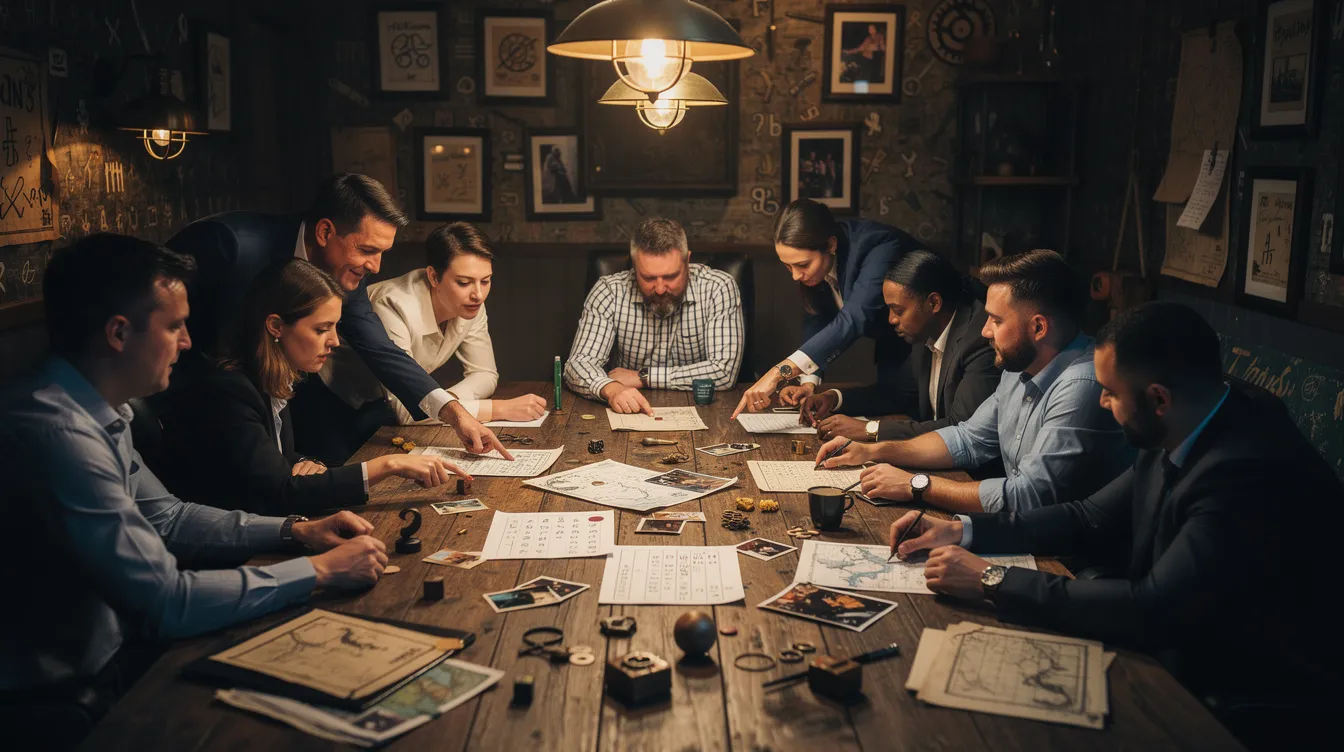
An escape room drops a small team into a themed environment filled with layered puzzles, hidden clues, and a ticking clock-usually 60 minutes. The entire team shares one goal: solve everything and “escape” before time runs out. There are no individual winners. Every person in the room either succeeds together or runs out of time together.
This environment is beneficial for corporate team building because it compresses hours of workplace dynamics into a single session. Escape rooms enhance problem-solving skills under pressure. Leaders must listen. Quieter team members often surface critical ideas that louder voices miss. Escape rooms foster collaboration among team members in a way that meetings and slide decks simply cannot replicate. Teams can improve communication through escape room challenges because the puzzles demand constant information-sharing-holding back a clue means the whole group stalls.
Specific skills developed in a well-designed escape room include:
Rapid delegation and role assignment
Pattern recognition across unrelated data
Creative problem-solving when the obvious approach fails
Calm decision-making in the last ten minutes when the clock is ticking
Unlike physically demanding adventure activities like ropes courses or obstacle races, escape rooms require brain over brawn. That makes them accessible to diverse ages, abilities, and comfort levels. A study of 280 participants across 62 teams found that group cohesion-both belonging and morale-increased significantly after an escape room experience, and the effect persisted one month later. Team members need to learn about each other’s working styles, and escape rooms surface those styles faster than almost any other format.
Modern escape venues like Exit 4 Escape Rooms Chandler avoid locked doors and claustrophobic layouts, which reassures hesitant participants and keeps the focus on puzzles rather than panic.
Inside a Corporate Team Building Event at Exit 4 Escape Rooms Chandler
Here’s what a typical team building event at Exit 4 Escape Rooms Chandler looks like from arrival to debrief.
Arrival and briefing. Your group arrives at the venue in Chandler, AZ. Every booking is private-no strangers are mixed into your game. Staff greet the corporate group, explain the rules, and set expectations. This briefing stage takes about 10 minutes and ensures everyone knows what’s allowed, how to ask for hints, and that the experience is designed for fun and collaboration, not fear.
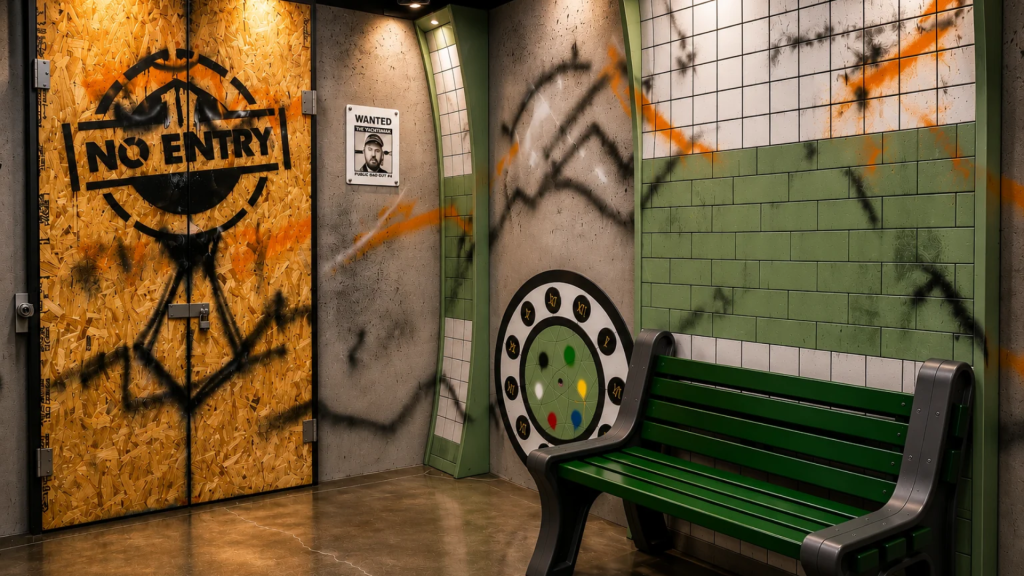
Choosing your room. Exit 4 currently offers four themed rooms. Think pirate treasure ship, a fantasy wizard’s wand shop, a superhero-style adventure, and a creepy cabin with a mystery-lite vibe. Each theme can align with specific team goals: the pirate room rewards delegation and resource management; the fantasy quest demands creative thinking and lateral puzzle-solving.
The game. Escape rooms can accommodate groups of 2-10 participants per room. Small groups of four to six tend to create the most immersive experience, while groups of eight to ten still work well in Exit 4’s spacious layouts. For departments of 15–30, multiple rooms run at the same time. The game itself lasts about 60 minutes, and the puzzles require constant communication-calling out clues, testing combinations, and deciding what to prioritize.
Post-game debrief. After the clock stops, facilitators invite teams to talk about what worked and what didn’t. This is where the real value lands: how did the team handle disagreements? Who naturally took the lead on which tasks? Did communication patterns in the room match what happens back at the office? Team members should learn about each other’s work style preferences, and a well-run debrief makes those preferences visible.

Where Escape Rooms Fit Best in Your Corporate Event Calendar
Escape rooms are most powerful as part of a larger team building event strategy-not as a one-off “fun” outing that never gets referenced again. Roughly 19% of escape room operator revenue comes from corporate groups, which signals that companies have figured out how to integrate these experiences into their calendars.
Concrete use cases where escape rooms deliver the most value:
Quarterly offsites. Use the escape room as the centerpiece, followed by a strategy workshop.
Project kickoffs. Cross-functional teams build rapport before heavy collaboration begins.
Post-merger integration. Teams from different cultures work together on neutral ground.
Leadership retreats. Executives practice delegation and decision-making under time pressure.
Reward trips. High-performing teams visiting Chandler, AZ get bragging rights and a great day out, and the same immersive experience works beautifully for memorable birthday celebrations for all ages.
Escape rooms work as both the main event and a high-impact add-on before or after a meeting, dinner, or training workshop. They’re less ideal for very quiet, reflection-focused retreats or deep financial review meetings where a different format would serve better. Planners should combine an escape room with a facilitated discussion to turn insights into concrete next steps back at the office.
Comparing Escape Rooms With Other Corporate Team Building Activities
No single format owns the corporate event space. Here’s how escape rooms stack up against other popular team building activities.
Trivia nights and game shows are easier to host for very large groups and offer healthy competition. But they’re often dominated by a few outspoken participants while others disengage. The collaboration skills practiced are limited compared to a format where the entire team must contribute to succeed.
Scavenger hunts are great for outdoor exploration and movement. Outdoor scavenger hunts build teamwork and critical thinking skills, and they enhance teamwork and decision-making skills when well-designed. But they can be logistically complex, weather-dependent, and lose focus when groups get too spread out across a local park or downtown area.
Cooking classes foster teamwork and communication among participants. Cooking classes promote teamwork and communication skills in a low-pressure, social environment. Collaborative cooking or mixology classes encourage teamwork and non-work bonding-ideal for relationship building. But they involve less pressure-tested problem-solving than a timed escape room challenge where every minute counts.
A scoping review of 14 studies in team-based environments found that over 80% of escape room participants rated enjoyment, engagement, and perceived teamwork improvement positively-a bar that most other formats struggle to match consistently.
Many companies successfully rotate formats across the year: escape rooms when they want a focused, high-intensity collaboration workout in a 60–90 minute window, and lighter formats like game modes, mixology classes, or volunteer days when the goal is social connection.

Designing Team Building Events for Small Groups vs. Large Groups
Group size is one of the most important variables when choosing a corporate team building activity format. What works for a small team of six will feel chaotic for fifty, and vice versa.
Small groups (3–12 people). These benefit most from deeper experiences: a single, challenging escape room, a strategy-heavy game, or a facilitated problem-solving workshop where every person participates fully. Research shows that teams of four to six people in an escape room produce the strongest communication and engagement outcomes.
Midsize groups (15–40 people). Recommend rotations: run multiple escape rooms at once with staggered start times, or pair an escape game with a short networking mixer or happy hour afterward. This keeps energy high and ensures no one is waiting idle.
Large groups (50+ people). Split into smaller working pods. Run multiple escape games back-to-back, or pair escape rooms with a larger social event at a nearby restaurant or hotel. This way every size group gets the benefit of an intimate challenge inside a bigger corporate event.
Exit 4 Escape Rooms Chandler works with planners to structure arrival times, game waves, and debrief slots to keep flow smooth across group sizes-whether you’re bringing a six-person executive committee or a forty-person department.
Planning a Corporate Team Building Event Your Executives Will Actually Attend
C-level calendars are crowded. Any team building event that doesn’t feel worth their time will get deprioritized or skipped. Clear goals are essential for successful team building events, and engaging team building activities require time and resources to organize properly.
Get an executive sponsor early. Involve at least one senior leader to define what success looks like: breaking down silos between product and sales, strengthening cross-level trust, or accelerating a new hire’s integration. Engaging team building activities require clearly defined goals-without them, even the best format falls flat.
Schedule strategically. Mid-week late afternoons tend to get the best executive turnout. Pair the event with a leadership town hall or Q&A to justify the calendar block. Book dates at least four to six weeks in advance for better attendance, especially during busy quarters.
Communicate clearly in invites. Tell people why this team building activity was chosen, how long it will take, what to wear, and what outcomes the company hopes to achieve. Vague invitations breed skepticism.
Exit 4 Escape Rooms Chandler’s team can coordinate custom time slots and room mixes to align with executive agendas and travel schedules-so planners don’t have to guess at logistics.
Corporate Team Building Ideas Beyond Escape Rooms
A strong annual calendar rotates formats. Here are complementary team building activities that pair well with escape rooms across the year:
Outdoor scavenger hunt around downtown Chandler or a nearby location for movement and exploration.
Volunteer service projects with a local charity. Volunteer service projects can enhance relationships and foster shared purpose within teams.
Cooking class at a nearby culinary studio for informal relationship building.
The Marshmallow Challenge, where teams build the tallest structure using spaghetti, tape, and a marshmallow. The Marshmallow Challenge helps teams with experimentation and collaboration.
Cardboard boat building, which encourages creativity and collaboration under absurd constraints.
Art workshops that promote creative expression and team bonding without competitive pressure.
Blind drawing activities that enhance clarity and active listening skills-one person describes an image while the other draws it without seeing the original.
Two Truths and a Lie, a quick icebreaker that promotes rapport and conversation among team members at the start of any event.
Improv workshops for communication, active listening, and learning to say “yes, and…” under pressure.
Rotating activity types keeps team building fresh, but using a consistent design philosophy-clear goals, debrief, inclusivity-matters more than the specific activity. Corporate planners can anchor their “skills practice” events at Exit 4 Escape Rooms Chandler and then sprinkle lighter socials and charitable events in between throughout the year, or repurpose the venue for fun, stress-free bachelorette parties in Chandler when team members are celebrating personal milestones. Check our blog for more ideas.
Making Team Building Inclusive for Different Personalities and Abilities
Modern teams are diverse: different ages, physical abilities, neurodiversity, and comfort levels with competition and public performance. Creating safe and inclusive environments is important for effective team-building initiatives, and any activity that excludes members undermines the entire point.
Escape rooms, when thoughtfully designed, naturally include roles for different personality types: observers who spot patterns, communicators who relay information, hands-on puzzle-solvers, and organizers who track what’s been tried. Not everyone needs to be a loud leader to participate and create value.
Practical accommodations that planners should consider:
Clear content warnings about themes (horror, darkness, tight spaces)
Avoiding overly scary or claustrophobic experiences
Ensuring that any physically demanding elements are optional
Gathering anonymous input before choosing a format to avoid excluding people with mobility concerns, sensory sensitivities, or anxiety
Exit 4 Escape Rooms Chandler designs rooms with no actual locked doors and avoids tight crawl spaces, making them comfortable for a broad range of team members. You can always leave the room if you need to. That design choice means participants focus on the puzzles rather than managing anxiety-which is exactly the point.

From Fun to Follow-Through: Debriefing Your Team Building Activities
Without a debrief, even the best team building events fade into “just a fun afternoon” rather than changing how people work together. A meta-analysis of team debriefs found that properly facilitated debriefing improves team effectiveness by roughly 25% over control conditions. That’s too large a gain to leave on the table.
Debriefing after team-building activities helps identify effective communication strategies. Here’s a simple structure that works:
What happened? Walk through the sequence-what puzzles did you solve, in what order, and who contributed what?
What surprised us? Where did someone unexpected step up? Where did communication break down?
What patterns look like real life? How does the way we handled time pressure in the last ten minutes mirror what happens during a product launch or quarter-end sprint?
What specific behaviors do we bring back to the office? Name two or three concrete commitments.
Example debrief questions tailored to escape rooms:
Who naturally took the lead on organizing clues? Was that the same person who leads in daily standup meetings?
When did the team split into subgroups, and did that help or hurt the process?
How did we handle the moment when we were stuck-did we talk it through or go silent?
Did anyone hold a clue without sharing it? Why?
Candid conversations improve team dynamics and collaboration. Team building events should create opportunities for candid conversations, and the debrief is where those conversations happen. Have a senior leader or HR partner capture two or three concrete commitments-shorter status meetings, clearer roles on projects, better handoff processes-that arise from the team’s reflections.
Exit 4 Escape Rooms Chandler staff can support debrief flows by sharing observations about communication styles and puzzle-solving approaches they noticed during the game.
Practical Checklist for Choosing the Right Team Building Format
Use this checklist before you commit to a format for your next corporate event:
[ ] Define the team goal. Trust repair? Onboarding? Leadership alignment? Innovation sprint?
[ ] Count your participants. Group size determines format. A small team of five needs a different experience than a department of forty.
[ ] Assess the mix. How many in-office vs. remote members? Are hybrid teams joining in person for this event?
[ ] Check physical ability range. Will anyone struggle with outdoor, physically demanding, or high-adrenaline formats?
[ ] Set the energy level. Low (social mixer), medium (creative workshop), or high (escape room, race, challenge course)?
[ ] Confirm logistics. Location (Chandler, AZ venue vs. your office), parking, budget per person, catering needs, and timing relative to work hours.
[ ] Ask the vendor. Private vs. shared space? Maximum capacity? Facilitator support? Cancellation policies?
[ ] Plan the debrief. Who facilitates? How long? What questions?
[ ] Schedule follow-up. One-month check-in to see if commitments stuck.
Effective team building requires clear goals and planning. When in doubt, treat escape rooms as a default high-impact option when you need a 60–90 minute, all-in activity that naturally requires cooperation and good communication. For more answers to common questions, visit our Private Escape Room FAQs.
Why Corporate Teams in Chandler, AZ Choose Exit 4 Escape Rooms
Exit 4 Escape Rooms Chandler is a locally owned, story-driven escape room venue focused on quality and guest experience rather than generic thrills. We exist to create shared stories-the kind your team will reference in meetings for months.
What sets us apart:
Private bookings only. No strangers mixed into your game. This keeps psychological safety high and lets your team play without filtering themselves.
Four themed rooms designed to avoid tight spaces and locked doors, with puzzles that reward communication over brute force.
Story-driven design. Each room is built around a narrative-pirate treasure, fantasy quest, superhero adventure, mystery cabin-so participants stay engaged and immersed.
Chandler’s local business community-tech, healthcare, manufacturing, and service companies-uses our venue for quarterly team building activities and executive retreats. The outcomes companies report: improved trust, better cross-team communication, and memorable shared stories that executives and staff reference back at the office. Pair a team building event at Exit 4 with nearby dining or meeting spaces in Chandler for a full offsite day that feels intentional, not improvised.
How to Book a Corporate Team Building Event at Exit 4 Escape Rooms Chandler
Ready to join the companies that have turned a 60-minute escape room into a turning point for their team? Here’s the process:
Choose a target date range. Confirm executive availability first.
Estimate headcount. Know your approximate group size so we can recommend the right room configuration.
Define the goal. Leadership alignment? Q4 celebration? New-hire onboarding? This shapes which rooms and debrief format we suggest.
Contact us. Bookings can be made through the Exit 4 Escape Rooms Chandler booking page or by phone and email. Corporate packages are available on request.
Customize. Ask about private use of the lobby, staggered start times for multiple small groups, and time built in for debriefing or short presentations.
Pricing starts at $38 per person plus tax for a private room adventure-a budget-friendly point compared to many offsite venues. Book popular weekday late-afternoon time slots several weeks in advance, especially for large groups or around peak celebration seasons like end of quarter and the December holiday schedule. Finally, send your company-wide invitation once the date is locked.
FAQ: Corporate Team Building Activities and Escape Rooms
These questions come up frequently from office managers and executive assistants planning corporate events. If your question isn’t answered here, our FAQ page covers additional logistics.
How many people can Exit 4 Escape Rooms Chandler handle for a single corporate team building event?
Each room accommodates 2–10 players, and multiple rooms can run simultaneously. A small team of four to eight fits comfortably in a single game. Departments of 15–30 can use multiple rooms at the same time, and larger groups can use staggered waves across a two- to three-hour window. Very large groups should coordinate directly with our venue to design a custom flow that fits both the space and the company’s schedule.
Are escape rooms appropriate for executive teams and C-level leaders?
Yes-escape rooms are particularly effective for leadership and C-suite team building. They compress collaboration, decision-making, and communication into a 60-minute simulation that reveals how leaders naturally operate under pressure. Executives often gain insight into their own habits: do they delegate or micromanage? Do they listen to the person with the answer or talk over them? Combine the escape room with a facilitated debrief or strategy session to develop those insights into concrete leadership commitments.
What if some team members don’t like scary or physically intense activities?
Exit 4 Escape Rooms Chandler designs experiences to be high on mystery and puzzles, low on jump-scares and physical strain. There are no real locked doors-you can leave any room at any time. We encourage planners to share concerns or accessibility needs ahead of time so our staff can recommend the most suitable themed room and prepare accommodations. Communicate to employees in advance that the focus is on problem-solving and teamwork, not horror or physical challenges. That two words of reassurance-“no scares”-go a long way.
Can escape room team building events work for hybrid or partially remote teams?
Many companies now have a mix of in-person and remote staff who only occasionally come together. We recommend using an in-person escape room as the centerpiece for those who can attend, combined with a virtual follow-up activity-like an online game show or virtual trivia-at a later date to involve remote colleagues. Treat the in-person escape room as a “relationship accelerator” for key cross-functional members who most need to collaborate closely day to day. Guess what: teams that play together in person build rapport that carries into every video call afterward.
How far in advance should we book a corporate team building activity?
Small groups can often book one to two weeks out. Larger groups and peak days-Thursday and Friday afternoons, December holiday windows, end-of-quarter celebrations-should aim for three to six weeks of lead time. Confirm executive availability first, then contact Exit 4 Escape Rooms Chandler to lock in a date before sending company-wide invitations. Last-minute options may still be possible depending on the schedule, but early planning ensures better room selection, smoother logistics, and a successful event that your entire team will remember.